Cocoon - One Summer of Girlhood

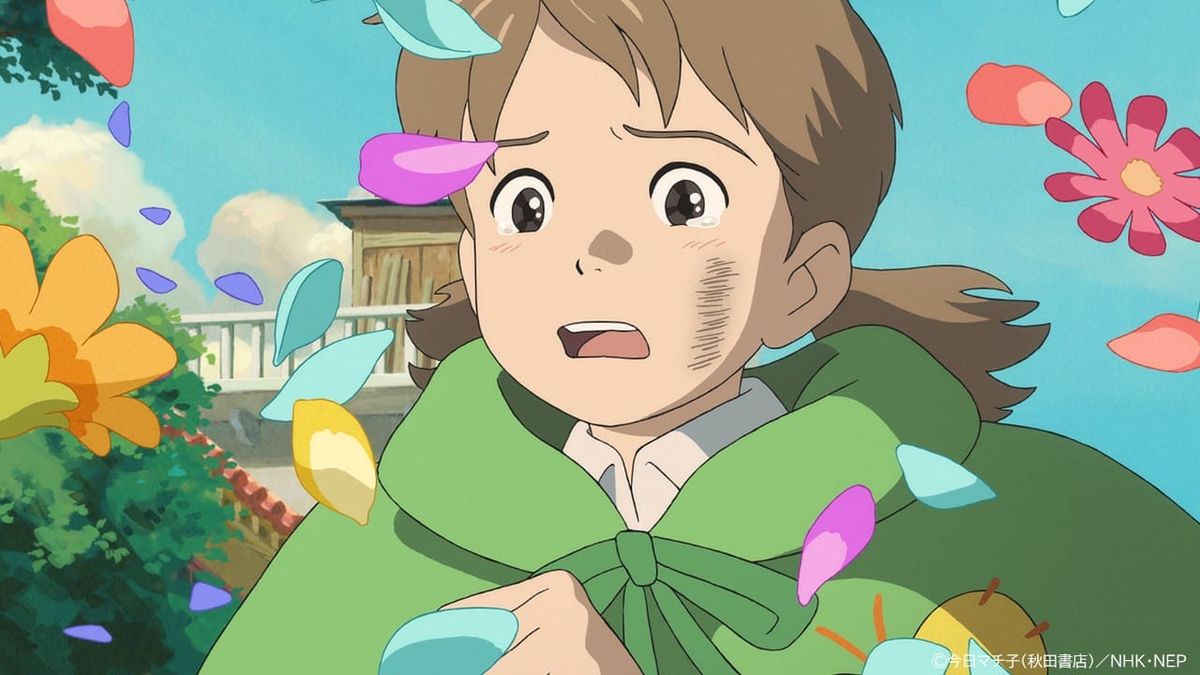
If you turned off the adaptation of Cocoon - One Summer of Girlhood before reaching the halfway point of its short, sixty minute runtime, you'd likely mistake it for Japanese military propaganda, which is unmistakably curdled by what comes after. Although the location, time period, and details of the ongoing conflict are left unspecified, everything about it screams World War II. The bombing raids by "the enemy", the brutality enacted on the few occasions the two sides come into contact, and the all-consuming nature of the war. The story concerns a large group of school-age girls who live and work on an unnamed Japanese island, rebuilding infrastructure and constructing and staffing ad hoc cave hospitals for the soldiers. The girls find companionship and remain in high spirits through trying times, pushing each other to work ceaselessly as a means to support their country. The tone stays light enough despite the looming threat of violence...until the enemy finally makes good on it.
Once it arrives, the cascade of horrors makes clear how indebted Machiko Kyō's manga (and thus Yukimitsu Ina's debut feature) is to the experience of the Himeyuri students. The rug pull clarifies that the earlier gentility was very intentional, calculated to to soften your defenses and to endear these girls to you, greatly heightening the emotional impact of the terrifying toll war takes on civilians. In that moment, their peace is irrevocably shattered, and soon after, the girls are instructed to leave the caves, despite the entire island remaining under siege by the enemy. Still, they make their way south as a group, beginning their march through Hell in an endeavor to reach the cape, more out of desperation than any sense that therein lies their salvation.
Read my full review on Pop Culture Maniacs.