Couture
"Last night, I gave a special party to myself, with everything I love. I told myself I deserve it. I must make the most of life, no?...We are going to be just fine."

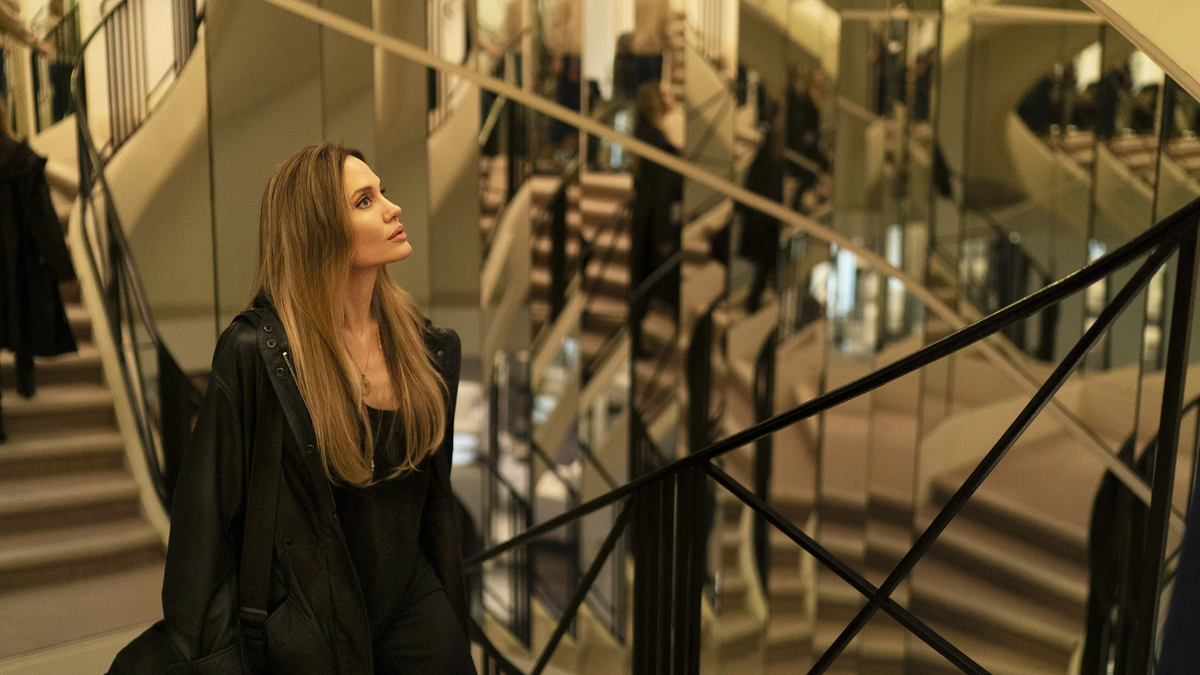
Couture feels like the culmination of French writer/director Alice Winocour's career so far. Her five features across fourteen years have centered on women trying their damndest to just get by in the world. Some of her subjects have reached for the stars, while others try so hard to melt into the background that they're not even the protagonist, despite the plot ticking along with their heartbeat. Their emotional stories can be a little on the nose, bluntly realizing their inner turmoil through external manifestation, or holding on to their situation so loosely that a traumatic event rapidly inspires a reorganization of it. In Couture, the auteur addresses her collage of interests in one project, exploring them through a meandering tapestry that builds into a roaring, poetic finale where the swirling gale is no match for her characters' power and determination.
The film interleaves the experiences of four women around the lead-up to opening night of Paris Fashion Week, with indelible marks left by many others around the edges. Most of our time is spent with American horror filmmaker Maxine Walker (Angelina Jolie), who's been hired to direct the opening film, much to her bemusement: she sees fashion as "useless and necessary." Her star is Ada (Anyier Anei), a woman from South Sudan with little modelling experience, identified while studying pharmacy in Nairobi. She's more excited to move abroad than in making either art form her profession. Makeup artist Angèle (Ella Rumpf) seems attuned to Ada's isolation, and is always the calmest presence in the room, despite her own chaotic week flitting around the city, while also angling to become a professional writer. Less thematically rich yet still wonderfully realized is the side plot involving Christine (Garance Marillier), a dressmaker working herself to the bone to complete her first solo piece, which will be worn by Ada to open the show.
It's no surprise that the week before such a major event is stressful, but Winocour is more interested in the parade of careless indignities that rain down upon the women. Despite being hired for their particular talents, the preparations' mechanized frenzy constantly threatens to flatten them out. A clueless executive gives Maxine notes on her script, and questions the relevance of vampires or primal screams to the world of fashion. Ada is the subject of scorn when the agency overbooks the models' flat, and embarrassment when the photographer deems her legs "too shiny". Maybe most devastating is a "script coach" harshly dismissing Angèle's work, condescendingly throwing her lack of experience in her face, before reminding her of the money she owes for the privilege. While she seems discouraged from screenwriting, she begins composing lush poems about her Fashion Week experiences, which we hear performed over various montages, lending their lyrical power: "They had to be fleeting images, bodies without words, but I knew they all wanted to scream one day, like me."
While Ada and Angèle's stories center on that strange and frustrating maelstrom, Maxine's mind is frequently elsewhere. Before we're introduced to the other women, Maxine receives a phone call with some medical test results. Her doctor is cagey, refusing to say what's going on, but insisting she make time to see a Parisian colleague (Vincent Lindon). The shadow of Cléo from 5 to 7 looms, although her challenge is not killing time, but finding space for that appointment, her schedule packed with the demands of directing. As much as this job wants to deny her needs, she manages to slip away, and learns the devastating news: cancer. While it shapes her emotional journey over the rest of the film, she refuses to be defined by it. She neither dives into nor retreats from work, and even manages to find, if not love, at least companionship, both emotional and physical.
That it's breast cancer tightens the already uncanny parallels between Winocour, Jolie, and the fictional Maxine. All three are directors who "have been touched by women’s cancers" (Jolie was never diagnosed, but had a preventative double mastectomy due to genetic markers and family history). The personal angle bursts through the screen, silently announcing its semi-autobiographical nature. Maxine is a lived in character, composed of a million little thoughts and drives, clear across Jolie's marvelously self-assured performance. Winocour never wants you to feel sorry for Maxine (or herself); rather, you are to witness the way the alienation it breeds mirrors the way the others feel, enhancing the warm glow that washes over you as each finds their own way towards satisfaction in their pursuits, aided by the lightly applied, dreamy score from Anna von Hausswolff and Filip Leyman.
Where the movie falters is in the contrivances it employs to juggle multiple narratives. While Maxine hooking up with Anton (Louis Garrel), her cinematographer, leads to some lovely moments of tenderness and vulnerability, their attraction blindsides the audience given their contentiousness on set. The conversations between Ada and Angèle add depth to their backstories, but we've no time to explore their impacts. Additionally, the denouement belongs to Maxine alone, the lack of a final check-in with the other women reducing the impact of their stories. That Jolie gets the most dramatically demanding storyline tracks with her star power, and she's more than up to the task. But inevitably, it causes the other threads to shrink in comparison, especially upon later reflection.
However, none of those weaknesses prevent the film from gently grabbing you by the shoulders and refusing to let you look away. Especially that finale, which is far more thrilling than contained in many a blockbuster, despite the wind up to it telegraphing the outcome. It's a triumphant, emphatic point on a movie full of people relatable in their uncertainty, whose approach to adversity is something we can all aspire to, no matter your circumstance. Winocour is not a widely known filmmaker in the US; Couture is a strong argument for that to change.