Mouse
"Their heartbreak is real. It is not all equal, but it is real. But none of us has lost a child."

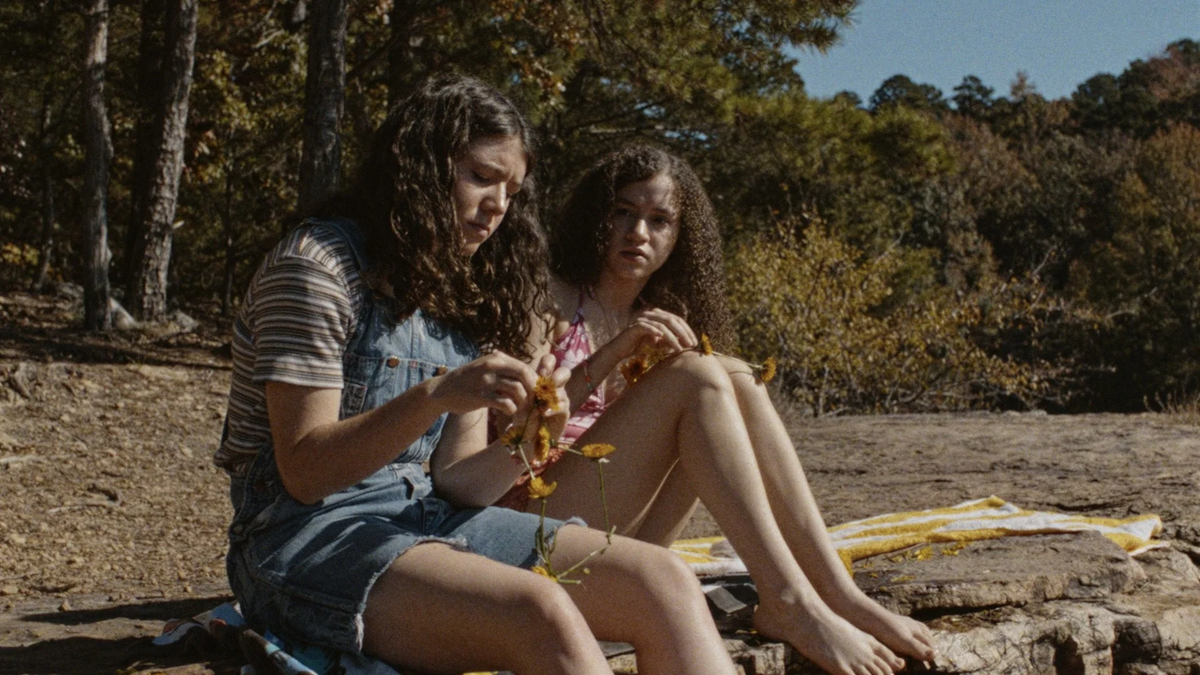
That a movie which seems so small and unassuming and familiar can have such a tremendous impact, felt from the outset but restrained until it bursts into view and forces you to confront it, really earns its title.
Of course, its really in reference to its main character, Minnie (Katherine Mallen Kupferer). That is, "Minnie Mouse", according to the recording Helen (Sophie Okenado) made of her visit to a psychic, attempting to contact her daughter and Minnie's best friend, Callie (Chloe Coleman), who died three months ago in a car accident the day after completing junior year. Despite Minnie's affirmation to the grieving mother, we almost immediately learn she fibbed in order to avoid breaking the comfort it brought Helen. It's the first sign that Minnie's devotion to Callie will drive her to try to fill shoes she's in no way equipped to wear, quickly establishing a co-dependent "friendship" with a woman decades her senior in which both are certain to fail the other.
Despite its posthumous fabrication, it's a name that fits her quite well. While reinforced in various ways throughout the film, school friend/acquaintance Kara (Audrey Grace Marshall) captures it perfectly during a cruel game of "Feedback" on what turns out to be the eve of her friend's passing: "That's the thing about you; I always forget that you exist." Some of that comes from being a hard-working, book smart girl at a magnet school for the performing arts. Furthering her isolation is the staunch wealth disparity: while everyone else (including Callie) has nice cars and lives in gorgeous, million-dollar houses taken care of by stay-at-home moms, Minnie lives with her hard-working single mom (Tara Mallen) and adopted infant brother in a modest single-floor bungalow. But even more, it comes from being friends with Callie, an incredibly outgoing, friendly, and supremely talented singer and performer who was loved by the whole school, students and teachers alike. Their strengths and personalities complimented each other perfectly, as Minnie gave Callie much needed study help, and Callie's aura ensured that Minnie could never truly withdraw. But in her absence, Minnie is without a counterweight, and threatens to fully disappear.
All of this makes Callie's passing that much more painful, along with the implication of a never spoken one-way attraction. But the most well-observed element that clearly weighs on her, that pushes her even harder to rise above others perception of her, is the way their classmates pervert their own relationships to the recently deceased into something they never were. Kara is the worst offender, calling Callie her best friend, despite stating with audible poison during that same game of "Feedback" that "You're not as perfect as you think you are." Minnie feels no such need to be the center of attention, but that also means she suffers in silence, until finding a comparative experience in Helen. For while Helen received the support and care of the community upon her daughter's death, after a few months and a divorce, everyone she encounters tiptoes around her, scared of too emphatically celebrating their kids and reminding Helen of what she's lost.
This swirl of honest, raw, uncomfortable, upsetting emotions is what makes Mouse so magical. The care and attention to detail on display in the second film from directing team Kelly O’Sullivan & Alex Thompson is overwhelming at times, avoiding many of the tropes that so often relegate similar stories (rightfully or wrongfully) to the dismissed category of "Oscar bait". It has no designs on being inspirational, freeing it to explore emotional situations less commonly put on screen. It's not every film that sees a grieving mother chastised by another for being an asshole, and even less so when that accusation is not entirely off-base, despite the precipitating behavior being quite understandable. At the same time, O’Sullivan's screenplay is not going out of its way to avoid every cliché, allowing the story to just feel natural. While its structure is broadly recognizable, its details and execution are far less so. Besides, it gives you plenty of opportunities to get so wrapped up in its emotional story that nothing else matters.
The backbone of the plot is Helen trying (emphasis on "trying") to prepare Minnie for the senior talent show, in which she's determined to sing the song Callie had planned, despite her self-identified lack of talent. But really, it's an excuse for us to witness their parallel journeys with grief, complete with all the ugly emotions and outbursts that brings. Meanwhile, we get a handful of parallel plots that gently play into the movie's concerns while fully fleshing out the world and its characters. Minnie's constant frustration with and embarrassment of her mother is befitting a teenager, but that her mother remains a nuanced and fully realized character allows it to evolve in subtle but noticeable ways as the plot progresses. The drama teacher overseeing the talent show, Mr. Murdaugh (David Hyde Pierce) is a humorous, warm, fatherly presence with lots of wisdom to give, including an understanding of and insight into grief so sharp as to imply he's experienced deep sorrow in his own life, without ever letting that rise to the surface. Most directly is her burgeoning relationship with video store clerk Kat (Iman Vellani), who lost her own mother just over a year ago, and flips between referring to her in the past and present tense, "because to me, she's not gone".
Every single performance in the film is a knockout, crafting characters with an unmistakable emotional depth, even when the script doesn't give them much sceentime. Okenado is as excellent as you'd expect: she's often been the best part of middling films, so when given the chance to deliver a powerful performance with an outstanding script, you bet she delivers. Most impressive, though, is how wonderfully Kupferer carries the film, rising to the occasion of playing the lead with aplomb. Her skill was clear in Ghostlight, but this is a much bigger and more layered part, which she absolutely nails. Amongst the supporting cast, Vellani deserves a special shout out; she provides such a joyful energy in her first non-Marvel role, while also perfectly capturing someone healthily working through the loss of a parent. And while I haven't mentioned Addisyn Grace Cain yet, she makes the most of playing Kara's best friend Brandi despite having few lines, silently communicating just how much of herself she sees in Minnie, stuck in Kara's shadow but devoted to her nonetheless.
The alchemy found by the Kupferer-Mallen clan and the O'Sullivan-Thompson team in two straight projects is impressive, alone making an argument for Mouse to get more attention than it has been. The filmmaking is simple and the story small, sure. But they craft so many powerful moments regardless, using tools as simple as a two-shot or a lingering frame. The most flashy they get is cross-cutting between seemingly unrelated scenes to create the film's most devastating, showstopping sequence, nearly making me sob on each viewing (and as I think about it while writing) as they lay bare their souls long before successfully finding their way through the pain. As much as I enjoy a good spectacle that overwhelms with scale or atmosphere or invention, they will almost always be trumped by personal stories of regular, imperfect people contending with the types of experiences we all have either faced, or fear we might. Mouse is easily one of the best such films of the year.