Quick Hits: April 2026
With this, I'm caught up.

As the movie season picks up, and the rest of my social life calms down heading into the summer, April marks the high water mark for my new release viewing so far this year. Even with Boston Underground Film Festival in March, as they screen a mixture of shorts and features, and of new and old films. So although I wrote more reviews in April than the previous three months, this is still one of the longer entries in this column.
- Fantasy Life •
- Pizza Movie •
- You, Me & Tuscany •
- Faces of Death •
- Mile End Kicks •
- Lee Cronin's The Mummy •
- Mike & Nick & Nick & Alice •
- I Love Boosters •
- Broken Bird •
- Over Your Dead Body •
- I Want Your Sex •
- Hokum •
- The Devil Wears Prada 2
Fantasy Life
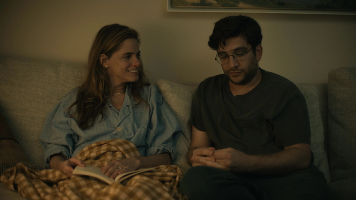
Don't let anyone tell you mumblecore is dead. I can name two recent movies about a thirty-something guy, awkward and quiet and unsure of himself, stumbling into the life of a woman at least twenty years his senior who is herself feeling a bit adrift, and takes solace in his attention, whether or not she feels about him the same he (quickly) comes to feel about her.
The biggest problem in Fantasy Life is Sam, both in the writing and the performance by writer/director Matthew Shear. He's inexplicably the protagonist, despite never really coming alive. His character never experiences that defining moment, and doesn't feel like he's changed much by the end. By all means, this should be Dianne's (Amanda Peet) movie, as her story is far more interesting and well-realized. Her time spent bonding with Sam helps her come into a better sense of herself and her life in a way that feels incredible real and rewarding. Much of which is due to Peet's astounding performance, charming and heartfelt and full of interiority. It's a shame how little attention it's likely to get, given the size of its release. But after ten years away from films, her return is a triumphant declaration of what we've been missing out on.
Pizza Movie
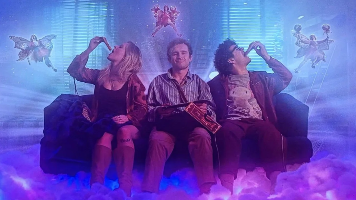
In the late 00s/early 10s, online sketch duo BriTANicK (Nick Kocher & Brian McElhaney) was a favorite of mine. Their wordplay and skill at wielding absurdity to both deconstruct and amuse was perfectly tuned for my sensibility. So there was no chance I was going to pass on watching their feature directorial debut, despite the response from friends and critics alike.
Perhaps I should have.
The goal was to create a college stoner action-comedy that satirizes modern life and critiques cliques and peels back the insanity of college, but you may realize the stack of hats is about to topple over. On top of that, the comedy is dire throughout, you can practically hear the guys putting pen to paper in the extensive and convoluted plot beats, and the acting is mediocre at best, although Sean Giambrone is by far the worst offender. It gives me no joy to report this is easily is the worst movie of the year so far.
You, Me & Tuscany
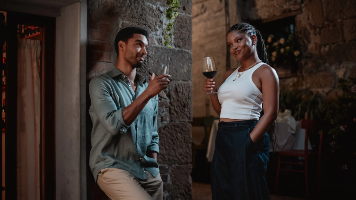
If audiences are so starved for theatrical romcoms, why do they (almost) never perform well? Because distributors seem to think wide releasing a made-for-streaming movie is sufficient.
That's not very fair to director Kat Coiro, but what else can I possibly call this? It's full of harsh, flat lighting. The plot is somehow simultaneously dead simple and overly convoluted, and every plot beat to come is crystal clear after the opening scene or two. The dialog is maddeningly dull and dumb, although some of the humor manages "charming". The supporting cast is forgettable at best, with our lead's best friend (Aziza Scott) the awful stand-out, eliciting a groan each time she showed up. Even the promise of seeing Tuscany never truly comes to pass, as the landscapes often look odd in a way that implies a green screen, despite being shot in Italy.
The movie's one real success is casting Halle Bailey and Regé-Jean Page. I thought their chemistry was good, although that could have been their individual charms reflecting off each other. If nothing else, they are both stunningly beautiful people, making it hard to be too upset about spending 105 minutes staring at them on screen.
Faces of Death
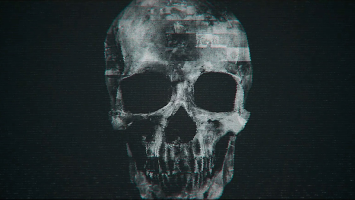
Remaking an infamous video nasty whose premise was showing you real, uncensored death and violence is a fascinating choice. But director Daniel Goldhaber pretty quickly justifies it, centering his take around a serial killer (Dacre Montgomery) taking inspiration from the 1978 original and posting the videos online, where social media moderator Margot (Barbie Ferreira) starts to question if they're as fake as her manager asserts.
Unfortunately, instead of leaving that as a silent nod for those who know, the original's existence becomes a key part of the film, leading into Magot's poorly realized investigation, before she becomes involved and the plot beats become quite contrived and eye-rolling. The final shot is baffling: it's trying to make a point, but doing so requires ignoring so much of what came before that it's nonsensical, despite having another path to the same result that would have been much more chilling and satisfying.
As it went down the route of middling slasher, all I could think about was how badly it wasted its setup.
Mile End Kicks
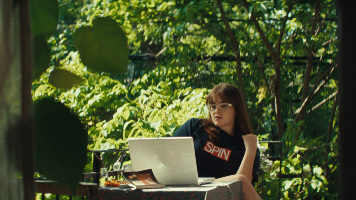
Across her two theatrical films (Roommates, released the same day as this, went straight to Netflix), writer/director Chandler Levack has yet to demonstrate command of story arcs. Her characters are ideas, with the seeds of conflict planted and alluded to and sometimes unceremoniously poking their heads up, but never developing. That is, until the final chunk of the film, when everything rushes into fruition. Which is worse, because it clarifies that she was intending to tell a story, but couldn't figure out the middle steps necessary to bring us along for the ride.
It's intentional that Grace (Barbie Ferreira) feels adrift and unsure of herself, but it makes all her decisions feel written rather than emergent, which is just less engaging. And it doesn't feel like it has all that much to say, save for the things it retroactively decides it was about in its closing monologue. I enjoyed the vibe and the music, as it's set in the early 2010s height of the indie rock "hipster" era, but not much else.
Lee Cronin's The Mummy
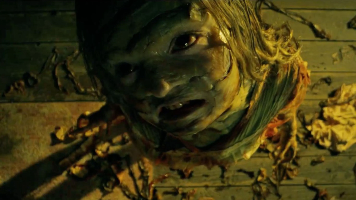
Listen, I like a split diopter shot as much as the next guy. But their effectiveness comes in part from their careful and deliberate use. Sparsity allows them to escape your notice despite having a powerful effect on your perception. But when you pile a ton into a single film (at least twenty, maybe more?!), and sometimes multiple in a single scene they just become silly. Especially when deployed in simple dramatic scenes for no clear purpose.
As with Evil Dead Rise, the movie is suitably gross and over the top and energetic, and the effects are quite good, aided by an excellent physical performance from Natalie Grace (complete with a creepy, crackly voice). But the narrative is all over the place, and eventually devolves into an over-the-top final set piece that is as fun as it is unmotivated, culminating in a denouement that undoes whatever good the story offered previously. So it's not a bad time, per se, but nothing to write home about.
Mike & Nick & Nick & Alice
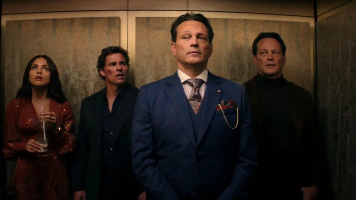
Two straight movies that severely overuse (and misuse) a visual technique, diluting its cool vibe and powerful effect. What are the odds?
In this case, it's step printing, best known for contributing to the immaculate, dream-like aesthetic of Chungking Express, although director BenDavid Grabinski clarified he was turned on to it by Warriors of Virtue. Its excessive use quickly becomes distracting, especially due to its incongruity with the film's frothy, quippy tone, and it's frequent unmotivated use. It doesn't help that on either side of each shot is an overlit, flat, uninteresting image characteristic of the streaming era (this released straight to Hulu), as opposed to the soft, textured neon of 90s Hong Kong.
But the screenplay is decent enough to carry it through in one piece. I still don't know what I think of Vince Vaughn's dual role, and Keith David is underused (because you can never have enough Keith David), but the supporting turns of Jimmy Tatro, Stephen Root, and Ben Schwartz are pretty damn fun. Despite failing to even halfway utilize its premise, there's value to be had, as long as you don't expect a tight sci-fi gem.
I Love Boosters
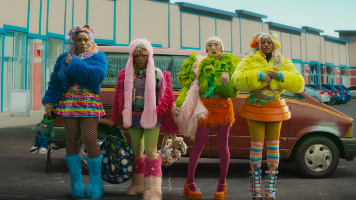
I don't want to say too much about I Love Boosters, as I intend to give it a second watch and full review once it hits theaters. Suffice it to say, it's a lot, a far busier and bolder film than Boots Riley's already busy and bold debut Sorry to Bother You. And that's not always a good thing, even as it's wickedly funny from start to finish.
Broken Bird
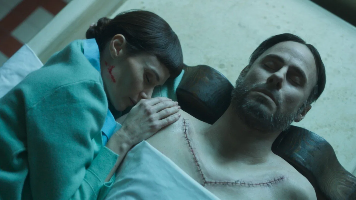
Something about this movie felt very literary. A clearly disturbed mortician named Sybil, played with wonderfully quiet intensity by Rebecca Calder, is obsessed with building a family of her own through unconventional, horrifying means. The atmosphere is excellent, the dialog is fine, but everyone behaves in a strange and alienating way, keeping us at a distance even as we locate where our sympathies are to lie. Some of that is no doubt because Sybil is the main character, but it begins to strain against the rest of the story, making me wonder how intentional it was.
And the ending...damn, what a disappointingly silly, grandiose way to wrap up an already mediocre film.
Over Your Dead Body
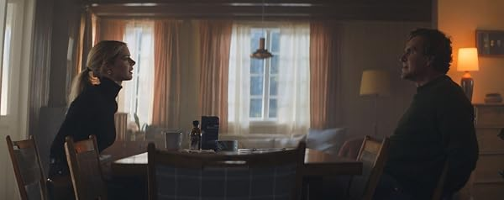
After the crushing disappointment of Pizza Movie (see above), I was delighted that Nick Kocher & Brian McElhaney immediately reasserted their skill as writers mere weeks later.
Directed by Jorma Taccone of The Lonely Island, the premise is fantastic: a husband (Jason Segel) is clumsily planning to kill his wife (Samara Weaving) on their weekend vacation, but after failing to catch her off guard, discovers that she was planning to kill him at the very same time! Segel and Weaving hurl themselves into the screenplay with fantastic comedic instincts, embodying the blinding fury mixed with mundane incompetence of normal people.
While the comedy ascends to new heights with the addition of some fugitives (especially the back-and-forth between convict Timothy Olyphant and (former) prison guard Juliette Lewis), it's held back by its slide into cliches and conveniences. Still, it remains a lot of fun, so it's easy to dub it worth your time.
I Want Your Sex
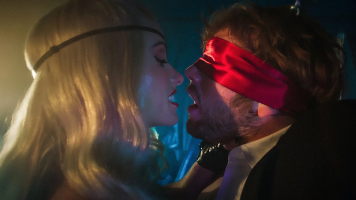
Upon seeing Gregg Araki's Teen Apocalypse Trilogy, he became one of my favorite directors. So I was disappointed to discover that with the exception of the impeccable Mysterious Skin, he never again approached their virtuosity, coming closest with his most recent film, 2013's White Bird in a Blizzard.
But instead of plumbing how we respond to deep emotional pain caused by shocking events over which we have no control, or unleashing a dingy primal scream that unabashedly portrays a frankness around sex and relationships and artistic value, I Want Your Sex is grandpa lecturing the youths about prudishness. He sets up straw man after straw man to tell Gen Z what they need, chastising their wariness of consent and power dynamics in favor of repeating "Loosen up!" ad nauseum, and declaring that sex isn't a big deal, despite making a whole movie to scold them for not having enough of it.
It looks terrible, garish and overlit and cheap as hell. The screenplay is poppycock, leaning on people playing symbols, with weak dialog further watering down anything it thinks it has to say.
The result is one of his worst movies, despite a great performance from Olivia Wilde.
Hokum
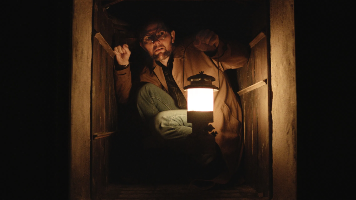
There are few directors as adept at creating a deeply unsettling, creepy atmosphere as Irish filmmaker Damian McCarthy. His first two films (Caveat and Oddity) established his reputation, yet he managed to further improve, finding ways to make every jump scare satisfying. Cantankerous asshole Ohm (Adam Scott) is trying to find a woman (Florence Ordesh) who's gone missing at the rural Irish hotel in which he's staying, where he encounters off-putting behavior of the rest of the staff and a boarded up room where his parents supposedly honeymooned ages ago.
The problem is that McCarthy hasn't figured out how to marry the oppressive moods he creates with a compelling story that sustains the whole way through. He puts a bunch of pieces on the board, but only pays off some of them, with far too many ending up red-herrings to really work. It's trying to be folk horror, but only through the lightest of touches that fail to impact the story (even if their imagery will sear your soul).
To say nothing of the incredibly frustrating ending, which we arrive at without warning, severely undercutting the previous experience.
The Devil Wears Prada 2
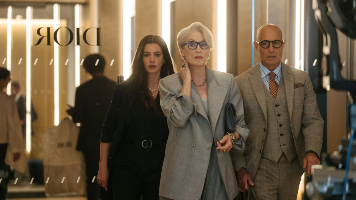
I only caught up with the original at the end of last year, but I was pleasantly surprised. I walked in not knowing what to expect, and got a bunch of laughs along with its confused attempt at a nuanced take on the fashion industry. The characters were wonderful, their caustic nature modulated just right (most of the time). I got the hype, even as it didn't become my favorite movie.
Which is part of the problem with The Devil Wears Prada 2. The same core creative team has returned, so they just reheat the first one. The pains they go through to reestablish the same exact dynamic between Andy (Anne Hathaway) and Miranda (Meryl Streep) were annoying, despite the added bit of Miranda struggling to soften her behavior for a modern workplace. The plot beats are the same: Andy is reduced to a bumbling mess around Miranda, but eventually her competence wins a modicum of respect, and all culminates in huge fashion show abroad, during which Andy tries to save Miranda from some disastrous situation without realizing Miranda has already sussed it out and is dealing with it.
Its one real addition, apart from a tired "tech bro" (Justin Theroux) and Emily (Emily Blunt) adeptly playing the game, is touching on the decay of journalism. It has little new or interesting to say about it, playing off the dichotomy of writing long, in-depth pieces for prestige and respect, and the need to drive traffic to the site and satisfy advertisers. Which could have been fine, if it didn't fade into the background by the midpoint, losing any momentum it had built up.
Maybe the single moment that most encapsulates the film is when Andy tells Emily she's "iconic". Emily has become an exec at Dior. She has some power in the fashion world, but she's hardly a standout, and we've no indication anyone outside of it knows who she is. So that statement, made while showing us an angled close-up of Emily's face, is meant for us, the movie eating its own tail and recognizing that it created an indelible character in the first one, and turbocharged Emily Blunt's career. It's the most egregious example of how much this iteration is drafting off the original, calling into question whether there was any reason for this existing save for cashing in on the original's fanbase.