Supergirl
"You are not always nice, but you are kind. You are not always perfect, but you are good"

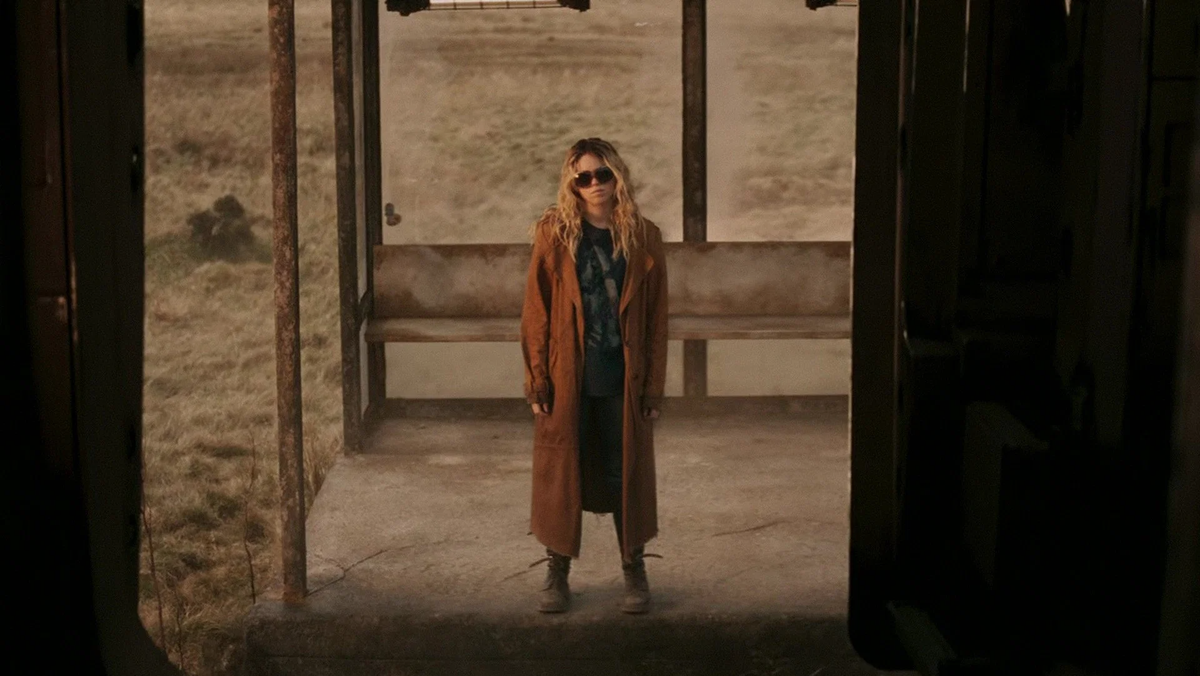
Director Craig Gillespie is very hit or miss. That is, of the two films of his I'd seen prior to Supergirl, one was a home run, and one was an embarrassing whiff. The subject matter and scale of each were well-suited to his approach, so success aside, they at least made sense. You could call Cruella his tryout, being a big budget adaptation of a female-led property with lore that people care about, but did it contain any fight scenes? Because possibly the most baffling part of Supergirl is how little action you see, despite being a movie full of big set pieces. It's all quick cuts and unstable handheld shots and whip pans and odd angles and CGI slop, the result being that the only time punches land are when the characters are rubbery simulacrums. Obviously, this makes filming easier; who has time to design and teach fight choreography? But fair or not, it's impossible to avoid comparing it to the balletic combat of The Furious, each painful strike still etched in our minds a week later.
The actual mechanisms of the broad plot are of little consequence. What matters is that it sets Kara Zor-El (Milly Alcock) on a collision course with the film's Big Bad, Krem (Matthias Schoenaerts), in a big final fight scene you've seen a million times before in every other superhero film. Her companion throughout is Ruthye (Eve Ridley), whose parents he killed because he's the Big Bad, and who refuses to leave Kara alone after watching her kick the ass of some huge dudes in a bar fight. Kara's been hiding out around red suns for a week or so in order to drown her isolation-inspired despondency in alcohol, but even in dirtbag mode, she cannot abide seeing a little guy get picked on (her ability to push through drunkenness and stellar power suppression to dominate a couple brutes two or three times her size is never remarked upon).
Not that she welcomes the company. Ruthye is so adept at escaping everyone's notice (until she declares herself and quest, like a knight from Medieval England) that it's a wonder the older woman never acquiesces to her presence and spares us the repetitive charade. In any case, the earnestness and sense of purpose Ruthye embodies is so contrary to Kara's front that her resistance is no surprise. Especially since the setup necessitates that Kara's arc is to find the will to care, to live up to her mother's plea that she doesn't have to be perfect, just good.
In fact, it's the flashbacks to her childhood that are the best stuff, and I have to admit actually worked on me. That her mother and father (Emily Beecham and David Krumholtz) escaped the destruction of Krypton, only to slowly die in front of their daughter from the kryptonite-poisoned soil of Argo City, is painful enough for us to witness, never mind for her to think back upon at her lowest points. It sets up the best scene, a late flashback showing the moment she (crash) lands on Earth to join her older cousin Clark (David Corenswet). He's so excited to finally have a fellow Kryptonian around, for although he's assimilated, being one-of-a-kind is lonely. But the gulf between them is almost more profound. Hell, they can't understand each other: why would she know English, or he, Kryptonian? But despite the difficulties this portends for their relationship, we see him resolve to make it work, to do everything he can to ease her path. It's so sweet, so powerful, so moving, and Corenswet makes the most of his one substantive appearance.
Which is why it stands out so much. The rest of the film constantly subjects us to the kind of snarky, quippy dialog that mirrors the deconstructionist-obsessed internet's favorite talking points. Even within that scene, Kara wonders to Krypto "Why is he in his underwear?" It's not as embarrassed to exist as Masters of the Universe, but it still wants to get out ahead of the jokes, and undercuts itself in the process. Hence placing a character at the center who doesn't take any of this too seriously until circumstances force her to. Not that the "too cool for school" archetype is the problem. The problem is the failure at building Kara towards empathy. Instead of chances for character growth, we get a series of sidequests on functionally anonymous planets that all conspicuously have yellow suns.
Ana Nogueira's screenplay is the perfect demonstrates while Billy Wilder said "If you have a problem with the third act, the real problem is in the first act". Krem also poisoned Krypto, apparently hesitating more to kill a dog than an entire family. So Kara's goal is more-or-less the same as Ruthye's from jump - technically, she just needs the antidote he conveniently carries around his neck, but it seems unlikely he'll give it up if she asks nicely. So there's no chance for her to selflessly pursue a goal that is irrelevant to her but means the world to someone else. The "all is lost" moment is imposed by external forces rather than a resurgence of her self-protective apathy. And instead of some rousing moment that signifies a change spurring everyone towards the final fight, it's a series of questionable contrivances that enable everyone to converge on Krem and his Brigands.
The narrative faff leaves ample time to absorb the craft on display, and oh boy, what a disaster. Their attempts to counteract the grey void problem of the MCU was to throw the characters in front of an LED wall, which they never successfully mask. But that's just in the setup; much of what comes later is either in dimly lit bars (that are suspiciously reminiscent of the Mos Eisley Cantina), or on planets whose surfaces are dull wastelands. Gillespie abuses the notion of a needle drop, stuffing this thing so full of pop music that you'd be surprised he didn't get his start in music videos if you didn't know it was actually directing commercials. It's not helped by the most prominent ones comprising a cringe-inducing "girl power!" starter pack, from late-career Sleigh Bells to a female-driven acoustic cover of "The Middle" to a recent Wet Leg single; if Le Tigre's "Decepticon" showed up, the ritual would have been complete, and the Spice Girls would have spontaneously burst through the screen.
All of these missteps easily overwhelm the goodwill (and tears) it earns through Kara's past, the limp resolution simultaneously apt and a poorly executed, unoriginal assertion of the role anti-heroes (for which Kara barely qualifies) can play. It's made worse by just how boring the climax is, the bizarrely inconsequential deployment of Jason Momoa as Lobo, and every single plot beat being telegraphed at least a full scene ahead of time, destroying any sense of stakes. It has its moments, sure, but they're few and far enough between so as to not count for much. While frustrating enough on its own, that the shockingly sparse subgenre of female-led superhero films continues to search for its unambiguous masterpiece is even more aggravating (no, Wonder Woman doesn't get there). And it does not bode well for James Gunn's DCU that it's stumbled so hard in just its second outing.