The Drama

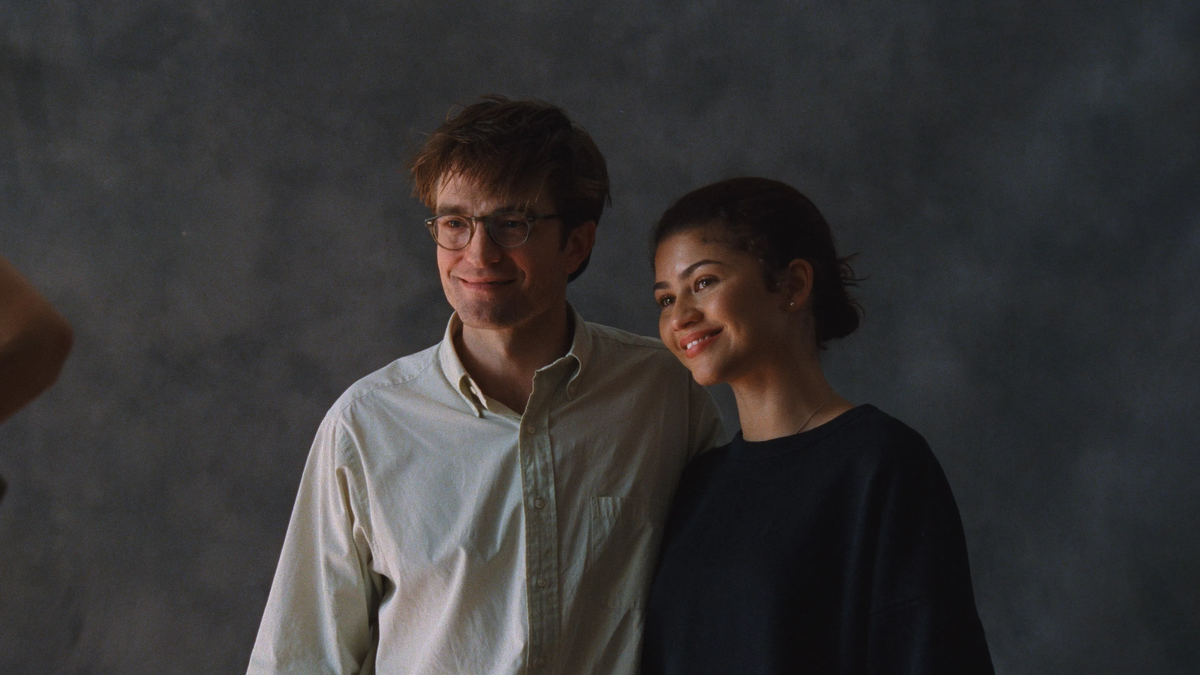
At the center of The Drama is a provocation: what if just before getting married to the love of your life, you discovered something that completely changed your perception of who they are? If they told you something so shocking that it threatened to upend not just the engagement, but your closest friendships? Does the time that has passed since the incident matter? Should it? Can people ever truly change? The obvious trope would be infidelity, of course. But as upsetting and destructive as that can be in real life, it's been done to death in the movies. Director Kristoffer Borgli is interested in far deeper, messier ideas of relationships and identity and personal change than could be approached in speaking about a flaw that many are familiar with encountering in their real lives.
Emma and Charlie (Zendaya and Robert Pattinson) are at dinner with their close friends, married couple Mike and Rachel (Mamoudou Athie and Alana Haim), when all four agree to share the worst thing they've ever done. The first three are laughed off as kids being dumb little shits; even though their actions were harmful, they're forgivable. But Emma's confession is not taken so lightly. Each member of the dinner party reacts differently, and in different time, but each of them do react. Charlie thinks she may be joking, Mike is stunned, and Rachel quickly becomes enraged and offended. Emma is stuck between defending who she was when it happened, apologizing for killing the vibe, and stammering out an explanation, all before the alcohol and stress cause her to vomit, officially ending the shindig.
I won't be spoiling what she said, because the precise transgressive act is not as important as the reaction people have to learning someone they love has within them the capability for horrifying things. Or does she? As both Charlie and Emma herself point out, she didn't actually do anything. Circumstances not only prevented her from the act, but diverted her down a much healthier path, which in large part led to where she is today. That's the point: the entire movie is concerned with perception of others, and how that influences our own behavior, as well as whether it should. So although it's Emma's admission that sets off the plot, this is a story about those around her. While we begin to understand (and even empathize with) her psychology at the time, that only comes out through conversations with Charlie as he attempts to understand, and to decide whether this wedding, mere days away, is still a good idea. It's his oscillating spiral that drives the rest of the plot forward, even more so that Rachel's more extreme and hostile reaction.
Borgli's approach can feel a bit clunky and on the nose at times, which isn't ideal when dealing with such a sensitive issue. For example, are the flashbacks (where Emma is played by Jordyn Curet) absolutely necessary? Maybe not. They do sell just how serious she was, sure, but we get that perfectly well from their conversations. And I'm not sure we really need the near-exposition as Charlie explains some of his thinking to other people in his life, even as it's played as him trying to work things out. Pattinson is a capable enough actor that so much of what's going on in his head was already written all over his face and body language, especially when combined with the bits of remembered incidents from their relationship that flit through his mind.
It means the middle of this intense drama does sag a bit, as we watch Charlie go 'round and 'round, working through his confusion, unaided by his best friends. He can only engage in halting conversations with Emma, as they're frequently interrupted by the final stages of wedding prep, necessary to keep up unless and until they decide to call it off. However, it also means that when he comes to his conclusion, we're pretty damn certain that he's confident in it, even as the stress and fear it breeds causes his behavior to become ever more erratic.
The movie's most effective trick is reflecting our reactions back on ourselves. Not laughing at us for caring or being upset, but asking us to interrogate ourselves, much as Charlie is. Why does Rachel's immediate and unceasing hostility get under our skin so much and so quickly? What about her looping her cousin Sam (Anna Baryshnikov) into it? Why does Charlie's insistence on pressing the issue, even as it's done gently, bother us? Why does Emma's repeated deflection of "Can we not talk about it right now?" rankle us so much, despite her justifiably not wanting to dredge up her skeletons, and the way it's clearly not indicative of who she is any more? To say nothing of the knock on effects as we begin to question what others do in response to her, forcing us to confront our own definitive choices in response to the actions of friends or strangers.
Underlying it all is a condemnation of the charmed lives of these young professionals, so insulated from the struggles of life that they seem to have not a care in the world despite living comfortably in an expensive East Coast city. We've little sign they understand hardship or pain, so the moment they're confronted with darkness, it threatens to rip them apart. They cannot handle the implications, nor fathom a life less idyllic, and so they can think of little more than to run away. Even Charlie, who's desperate to understand and justify staying together, emotionally distances himself through self-destructive behavior.
All of this is shot through with the same tone for which Borgli has shown an affinity and aptitude over his three previous features. It's darkly comedic, yes, but quietly enough that you never quite get the release you're after, keeping you in the discomfort even as it elicits a chuckle. You're kept off-kilter all the way through its ending, a denial of closure that pulls its punch just enough to be disappointing. Everyone does a great job selling it, even Haim, whose role is the most broad and cartoonish. Although Pattinson stands head and shoulders above the rest, the bumbling Englishman by way of Martin Freeman instead of Hugh Grant. Even the score gets in on the bizarreness, Daniel Pemberton's composition consisting almost entirely of flutes, often appearing one or two at a time, tooting out strong staccatos surrounded by gulfs of silence.
Borgli's career has been categorized by stories that stare at violation of the social order in some way, and how it can be further disrupted by the specific forces of modern life. Advertising's influence on art, the self-immolating desire for fame, and the way that what we see on TV influences our behavior. It is confrontational and provocative, seeking to soften up the viewer to receive his characters' bizarre behavior. Most of all, by staring into the abyss, Borgli seeks to show us that we're not as different from these people as we might think, and even that we certainly know someone whose inner life is perfectly reflected by them.
And that's the kicker. The thought that makes your blood run cold, even before Borgli feels the need to spell it out through Charlie's dialog. Although she's "just a movie character", learning that someone as normal and well-adjusted as Emma, as Zendaya, even thought about such an act? Makes you wonder who you interact with on a daily basis that has done the same...