Quick Hits - October 2026
What a month!

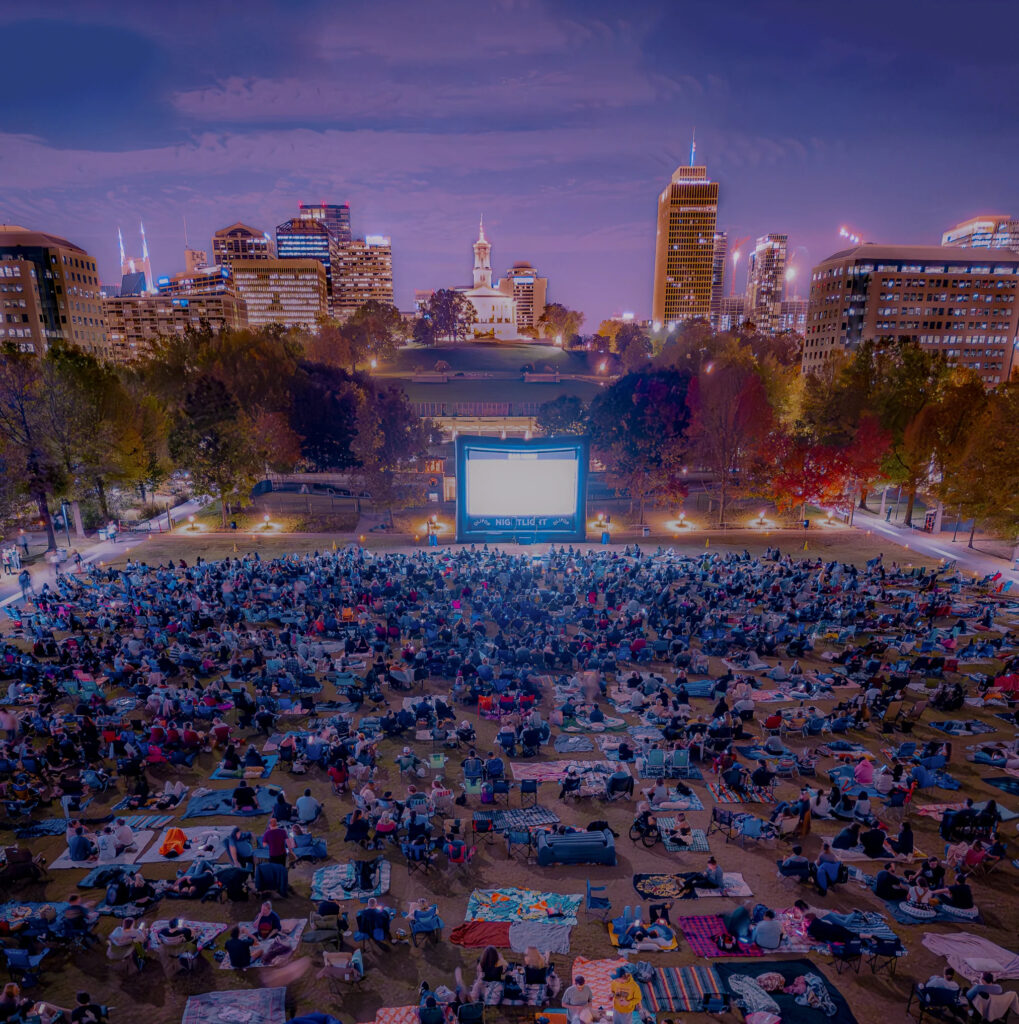
October is always super busy for me, what with the New Hampshire Film Festival and IFFBoston's Fall Focus, especially since the latter began spanning two non-consecutive weekends in 2025. All told, it represents a very outsized proportion of the new releases I see: I caught over fifty new movies in the past thirty-one days, good for nearly a third of the 2026 releases I've seen all year.
Given the huge amount of movies listed below, I'll keep them shorter than usual. As with the March edition, I'm also omitting films mentioned in my festival wrap-ups. Notably, that includes the coming IFFBoston Fall Focus Wrap-Up, which will publish some time after closing night on November 4.
- Verity •
- The Influencer Project •
- Appofeniacs •
- The History of Concrete •
- Your Mother Your Mother Your Mother •
- Club Kid •
- A Talent For Murder •
- Crawlers •
- Out of the Woods •
- Road To L'Etape Du Tour •
- A Safe Distance •
- Frogtown •
- The Diary of a Chambermaid •
- Test •
- Rose •
- Sour Minnows •
- Joybubbles •
- Carl Sagan: We Are All Made of Star Stuff •
- Fatherland •
- Act One •
- It Goes That Quick •
- A Man of His Time •
- Here I'm Alive •
- The Last Yztari •
- The Devils •
- Whalefall •
- Clayface •
- Wicker •
- The Only Living Pickpocket in New York •
- Everest: The Other Side •
- Dead Lover •
- La Gradiva •
- Ashes •
- Coward •
- Split Rock
Verity
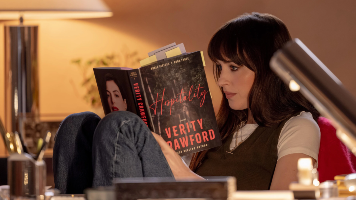
The first Colleen Hoover adaptation that had any appeal outside the romantic drama crowd, and it's a complete dud. There are some fine if super cheesy narrative ideas here, but the film is sunk hard by how seriously it takes them, only occasionally allowing itself to have any fun. It's further hurt by Dakota Johnson's lifeless performance, causing me to continually reevaluate whether she has any real talent, or if she's just been very well cast on a few occasions.
The Influencer Project
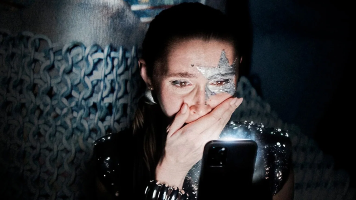
Premised on the destructive nature of the parasocial relationships we develop with social media stars, it's nothing revolutionary, but is fairly compelling for a lot of its runtime. A dude starts harassing an influencer (Chiara King) online while she's on a trip to Denmark, all while a documentary crew films her (played by the film's real crew). He starts posting pictures of her daily activities along with threats that quickly escalate, ratcheting up the tension and producing a handful of effective scares.
However, it can't decide whether or not to be a screenlife film, and as we hurtle towards the finale, the contrivances get louder and louder until it morphs into pure fantasy. The ending is eye-rolling, especially the stupidity of how they explain his motivation. It pivots into an indictment of our relationship to violence and misogyny, of the dangers posed by the anonymity of the internet, and of our tendency to worship villains, but so clumsily that that it's hard to buy it in universe, although it holds some truth in ours.
Appofeniacs
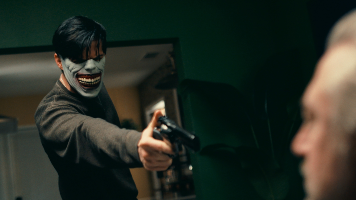
Easily taking the title for worst movie of the year, Appofeniacs posits that maybe AI is bad, actually?
Except that it also doesn't. AI is the jumping off point for a couple of its vignettes, but everything after the initial setup is contrived screeching of the most cynical view of humanity imaginable. The film has no structure, nor characters, nor story. It's a shotgun blast to the wall that fails at even being a pastiche of the genres and styles it's trying to ape. Everyone is impossibly dumb and naïve, the attempts at humor fall flatter than I thought possible, and the acting is terrible.
I hated every moment.
The History of Concrete
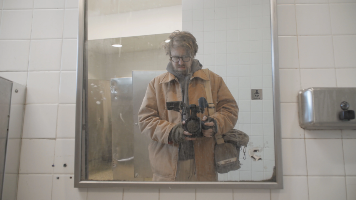
John Wilson's schtick is to take some topic that's piqued his interest as a starting point, and follow every tributary that arrives, no matter how inane. That's how this look at concrete ends up structured around a middle-aged rock musician (Jack Macco) whose fiancé passes away during filming, at which point John learns she was a trailblazing judge. It's how we keep coming back to the Sri Chinmoy Self-Transcendence 3100 Mile Race in Queens. And it's how this feature-length YouTube video quietly shifts into the struggles of retaining control of your art when the requirements to get it seen continue to demand constraints that threaten to compromise it.
All narrated in the second-person.
Your Mother Your Mother Your Mother
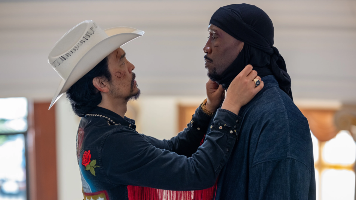
Fortunately for all of us, when the MCU's Blade reboot fell apart, writer/director Bassam Tariq and two-time Oscar winner Mahershala Ali had a backup. Ali plays a devout Muslim hitman and absentee father caught between worlds when his wife suddenly passes away. The kicker? Their youngest child is still breastfeeding, and refuses formula. As such, he's forced to race the clock as his late wife's stash dwindles, while his return to town has activated some local gangsters whom think he owes them a favor. All of which attracts the attention of a delightfully unhinged John Cho as a crusader of the Moral Majority variety.
The bombast and audacity prevent the more contemplative aspects from landing, but as faith emerges as one of the central tenants, it blossoms into a uniquely strange and compelling story.
Club Kid
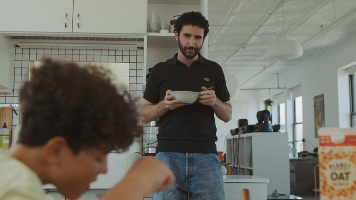
A lovely, warm, highly entertaining delayed coming-of-age film about a club promoter (writer/director Jordan Firstman) who finds out he has a ten-year-old kid when he's suddenly dropped off on his doorstep. The plot beats play out roughly how you'd expect, give or take a deeply artificial feeling major event on which the third act turns. The kid's demeanor makes less sense the more you learn about his background, although Reggie Absolom's performance is great. It's essentially just a hang-out drama, and a reasonably good one, just missing that spark to really elevate it.
A Talent For Murder
This is a very oddly structured film.
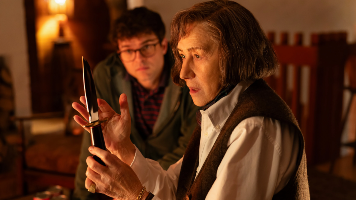
Literary agent Edward (Alden Ehrenreich) engages in a battle of wits with author Patricia Highsmith (Helen Mirren) in an attempt to get her to continue the Tom Ripley series. Then, it settles into the two of them collaborating on it in real time. Thing is, we see that story play out in roughly real-time with Edward as Tom, only occasionally jumping back to the completely unrelated real-world drama for a stretch. Edward has a few moments in which he draws courage from Ripley's actions, but it's a long road to walk for such light payoff.
And then, the ending pulls an Argylle; a series of quick twists that stack on top of each other so quickly that it all comes toppling down into utter nonsense.
Crawlers
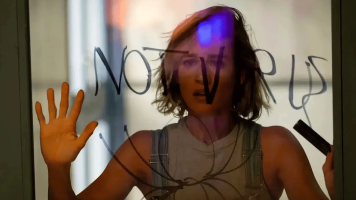
An unauthorized remake of the French film Infested from a few years back, but with far dumber characters, far less creative set pieces, and taking place entirely in a fantasy world that has to continually reinvent the rules for the spiders to keep them scary, with every character a vicious asshole in all situations, even when it runs counter to their goals. It's not scary, it's not funny, it's not thrilling, it looks like garbage. So why was this released?
The only thing keeping it from the bottom of the year is that Appofeniacs was released a week earlier.
Out of the Woods
After a cold open that serves no purpose, we're ready to explore the complexity of two friends (Frances Fisher and Mimi Kennedy) reuniting fifty years after sharing a summer fling just before getting married and retreating to what was expected of them. Instead, we get lots of stilted acting and absurdly long pauses in speech and overwrought miscalculations of melodrama. The characters have no interiority, so few of their actions make sense or carry any weight. It takes so long for anything to happen that you'll likely be asleep by the time we get there. Not that you're missing much.
Road To L'Etape Du Tour
As charming as it is to see a movie filmed in nowhere New Hampshire, this character drama makes the safe decision every step of the way, refusing to deviate off the beaten path even once. A woman with a heart condition (Julia Coulter) endeavors to replace her father (Reed Diamond) in the L'Etape Du Tour when he suddenly passes away. She's trained by the one other employee (Luis Augusto Figueroa) who works in his shop, a handsome fellow who's not afraid to challenge her. But, wouldn't you know, she's mere months away from being married. Guess how this all plays out?
The performers are actually pretty solid, but they just can't rise above a terminally bland screenplay.
A Safe Distance
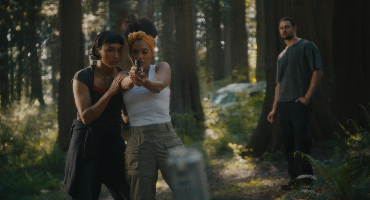
Another pointless cold open, except this one severely harms the film, removing all tension.
It's another great premise wasted, too. A woman (Bethany Brown) gets into a fight with her boyfriend (Chris McNally), he leaves her in the middle of the dense forest, and she stumbles across a pair of bank robbers (Tandia Mercedes and Cody Kearsley). They nurse her back to health, and romantic entanglements begin to form, leading to extra drama. That we know how it ends ensures the focus is on the characters and the dialog, which is a mistake, as neither is very strong. So we're left with a movie that tells us capitalism is bad, and bank robbing is a victimless crime. Fine enough, I guess, but it's done so much better in almost every other film I've seen that sympathizes with an outlaw.
Frogtown
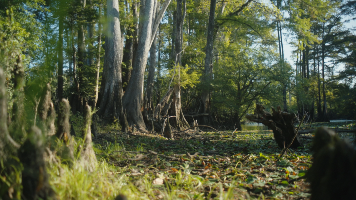
A pseudo-documentary about our innate desire to believe in the fantastical, to hold on to the wonder of childhood for as long as we can. Our way in is a Florida woman obsessed with an oversized amphibian she saw when she was six. Such is her conviction that she never attempts to defend it, she just asserts his existence and her connection to him as fact. Even as she constantly ropes in her granddaughter to aid in promoting the Frog King parade she's hoping to throw, eventually fracturing her relationship to her daughter.
While an enjoyable enough journey, the end calls into question what exactly the point of all this was, as the filmmakers put their thumb on the scale, flying in the face of where the narrative was headed. And with almost no follow up commentary, we're left more confused than anything else.
The Diary of a Chambermaid
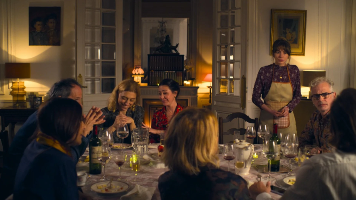
Radu Jude has taken up the mantle of prolific social satirist (see Do Not Expect Too Much From the End of the World), so it's only natural that he film the same source material once adapted by Luis Buñuel. It's pretty funny, if a bit disjointed, and makes a bunch of subtle points through the mundane and the absurd. The ending is awkward, and doesn't leave you with all that much to think about, but it's an enjoyable and somewhat illuminating way to spend your time, nonetheless.
Test
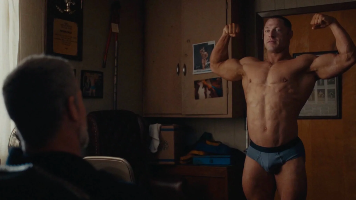
Bodybuilding is a domain not historically well represented in narrative films. It's starting to change with movies like the excellent Love Lies Bleeding, but the rest follow a familiar structure, even when the sport at the center is a different form of hyper-masculine peacocking. Test is no different, but remains compelling due to a great lead performance from Brock Yurich. Additionally, it's willing to take a few swings, leaning into the types of accusations oft-levied at such events. But it's ultimately overstuffed, necessitating that most are given short-shrift, harming the overall experience. Its moving for all the right reasons, but if it trimmed down, it could have really packed a wallop.
Rose
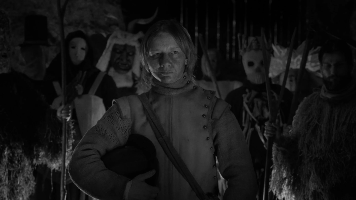
After the one-two punch of The Zone of Interest and Anatomy of a Fall in 2023, we hadn't heard much from Sandra Hüller. This year, she's in four features, although relegated to supporting in the two big-budget American projects (and stealing every scene in one of them).
Here, she is the titular Rose. Not that anyone knows that. Those in the village around her inherited cottage just know her as "The Soldier" on account of her return from the Thirty Years' War, and carefully living as a man. The deception goes well enough that she eventually takes a wife, although all indications are that it's solely to gain autonomy in a time that women are treated as property. The characters are well crafted and the narrative compelling, but it lacks the deep emotionality to really pull me in.
Sour Minnows
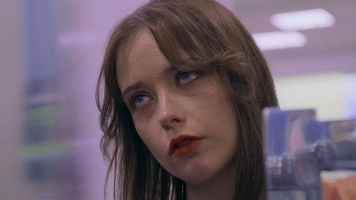
Harrison Atkins's debut film Lace Crater was a delightfully strange spin on a ghost story, not wholly successful, but bizarre and engaging enough to keep my interest.
A decade later comes Sour Minnows, which is what happens when someone attempts to make a cross between a David Lynch film and Donnie Darko, but with no understanding of how to make such abstract storytelling interesting.
Joybubbles
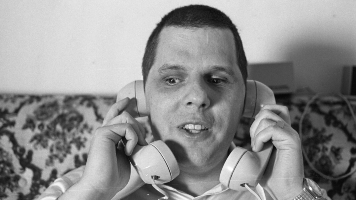
Joybubbles was a legally blind man who was so dedicated to retaining the magic of childhood that he declared himself the world's oldest five-year-old. He was a key part of the phone phreaking subculture in the 70s, creating a (relatively) popular party line where people would gather to listen to his stories. The filmmakers had access to the mountain of tapes he recorded, so we hear his voice throughout, his narration creating a lovely atmosphere. The film is a warm tribute to his endless spirit. Although nothing too special, I was certainly more taken with it due to my interest in phreaking and its connection to the early days of computing and hacking.
Carl Sagan: We Are All Made of Star Stuff
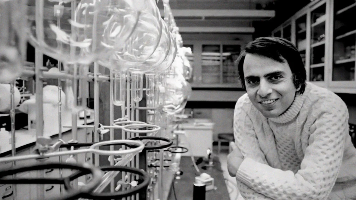
As a long time space nerd, I've always been fascinated by Carl Sagan. That an astrophysicist could climb to such pop cultural heights, well before Cosmos dazzled a generation and decades before Contact, is wild. However, while this doc puports to cover his whole life, it only asserts his growing popularity and the field's frustration with him, before hyper-focusing on the time he was working on Voyager, and his unorthodox courtship of Ann Druyan. It doesn't shy away from his stark failings as a father and husband, but it shines brighter light on the magic between him and Ann. There's not much of a throughline, so it ends up kind of shapeless, although not unenjoyable or uninformative.
Fatherland
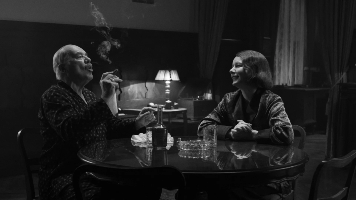
The second Hüller vehicle of NHFF sees her as Erika, the daughter of Thomas Mann (Hanns Zischler) in the period shortly after WWII as she accompanies his journey to East Germany for a speaking tour, despite the suicide of her brother, Klaus (August Diehl). It lacks the quiet power and indelible images of director/co-writer Paweł Pawlikowski's last few films, while narratively a bit meandering and aimless. It's trying to get at things about the consideration of legacy, but fails to be as indelible as his previous work.
Act One
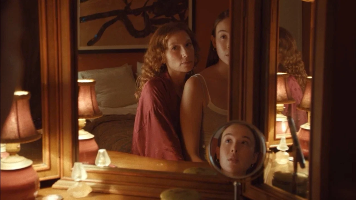
What if Whiplash crossed with Black Swan and Fight Club, but for acting? That's a pretty solid idea for a story, but the pacing becomes super important, to ensure the rising tension and isolation feel coherent rather than plot devices. Writer/director Sophia Takal nearly attains that, but falters down the stretch, leaving it unsatisfying. Still, the journey for much of the way is exciting and disturbing in just the right way, feeling like an eerily accurate depiction of how certain people operate in the world.
It Goes That Quick
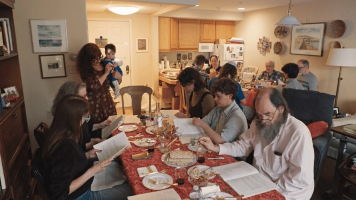
Documenting the mundane reality of life as you age, as the people in your life shift, and as you are forced to reckon with death is an admirable goal, especially when the subjects are the various members of your own extended family. The disjointed slices of life we see don't really connect or build or combine in ways that are all that meaningful. On the one hand, that's life, ain't it? On the other, it doesn't take seventy minutes to make that point.
The filmmakers may have something else on their mind, as they make a few deliberately artificial decisions. They and their equipment appear in the from from time to time, and we see one of the directors coach a family member on a line. But what the purpose of that was I could not figure out.
A Man of His Time
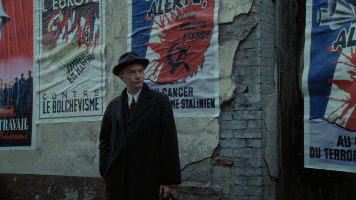
This is a historical fiction film based on the life of the filmmaker's grandfather, a Frenchmen seeking political and social power and influence during WW II in the Vichy government. He's a calm, calculating, shrewd opportunist, who forgoes everything in order to chase his aims, including his family. While it provides an interesting look at the kind of person who thrust themselves into such a fraught leadership structure at a dark time, it's so low-key and drawn out as it meanders through time that your attention wanders.
It also picks one of the strangest and most abrupt places in which to end its story, despite passing a few more suitable off-ramps.
Here I'm Alive

A collage of stories in New York, all concerning the crushing loneliness and isolation of modern life, and the ways that technology fails to live up to its promises to alleviate that ill, exacerbating it more often. This is even more pronounced for the disadvantaged, especially in a place as demanding and high-strung as NYC, where even just surviving is a struggle, never mind finding a way to climb out of the endless cycle of despair.
The point is well made and well observed, but the (mostly) disconnected nature of the stories once again asks if this would have been better as a short film.
The Last Yztari

This should have been a powerful story of an army vet who's refused to let losing her arms in an IED explosion slow her down, who's thrown herself into crafting an expansive sci-fi/fantasy world in which to set the series of novels she's writing. It was never going to be my favorite, as it's just not a style of documentary I respond to very strongly, but it could have been fine.
However, the filmmakers got personally involved, and decided to give her the "gift" of bringing her world to "life" using generative AI. If it was primarily her using it, I'd have been more conflicted: you could spin it as an accessibility tool, despite how independent she remains across many areas of her life. But she's just doing the concept art (and it's unclear if she was using it before the film crew showed up), and the film team is turning it into full scenes...using genAI.
Why? What we see adds very little to the movie, even once you get past how awful it looks. Her writing draws on her own experiences and relationships, but most of what we see isn't that. Interleaving it between watching her go about her life with zero discussion of the AI is just strange, and severely detracts from the experience.
The Devils
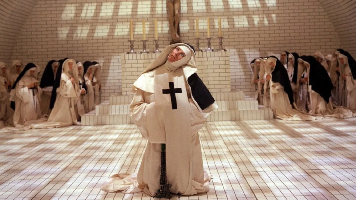
This isn't technically a new release, as Ken Russell's The Devils first came out in 1971. However, the UK censors and US distributors demanded steep edits to achieve even an 18/NC-17 rating. This restoration is the first time the entire film has been widely available uncut, which is deserving of celebration.
The film itself is outstanding, a darkly comic fable in which a Franciscan nun (Vanessa Redgrave) and her convent is driven to sexual hysteria simply by how hot Father Grandier (Oliver Reed) is, a treatise on power, repression, the perverse intermingling of church and state, and redemption.
Whalefall
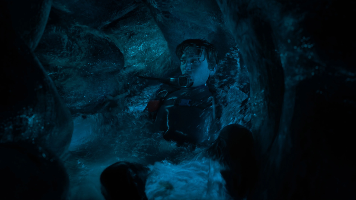
Austian Abrams is having a great run. As Zach Creggars muse, he's gained a ton of attention recently for his standout role in Weapons and leading man turn in Resident Evil. Whalefall was his chance to helm a studio film, and it's suitably weird: a diver gets swallowed alive by a whale, and must figure out how to escape. Unfortunately, in adapting the novel, director Brian Duffield seems almost embarrassed at the prospect of a straight survival story, insisting on weaving in flashbacks to the difficult relationship with his father (Josh Brolin). I guess it makes some sense, as the necessity of Abrams's oxygen tank deprives him of his voice for much of the film. But that, combined with the disorienting filming inside the whale, makes for a muddled mess.
Clayface
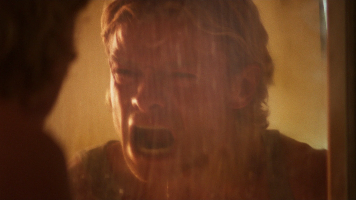
Post-Endgame, it's rare for me to get excited about a superhero movie. So James Wan putting together a grimy body horror movie around a traditional Batman villain was an intriguing offer. The digital makeup effects are outstanding, but the narrative never gets going. It spends far too long on its prologue, the love triangle it seeks has zero motivation or build, and the scope of the revenge he seeks makes hard to root for given his lack of self-reflection. Even the visuals are flawed, as the scene is often surrounded by poorly composed shots against an LED wall. The fumbling of this one ends up more disappointing, given the promise it showed.
Wicker
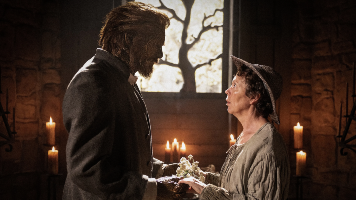
The idea of a spinster Fisherwoman (Olivia Coleman) asking the village Basket Weaver (Peter Dinklage) to make her a husband (Alexander Skarsgård) is a perfectly absurd premise. The film knows it and leans into a satire of gender roles within and around marriage, but does so with an oddly silly tone that reduces its effectiveness. While it never drops its humor, it morphs into a more dramatic register as the story progresses that just doesn't land, in part due to its insistence on breaking it up with people and reactions that don't seem to fit in the world they've created. Still, it's amusing enough, and it seems that if you're in the target audience, it will more than likely be a direct hit.
The Only Living Pickpocket in New York

I have all the time in the world for stories that engage with the idea of looking back, both on your life and the way the world used to be, taking stock of your failings and the way the world left you behind. But I've grown quite tired of incurious lamentations of what we "lost", of older people scoffing at the young, and the insistence that today's generations are all bark and no bite. While not the only thing on Pickpocket's mind, it's a key part of the climax, so it's impossible to ignore.
Granted, leading up to that is a wonderful, autumnal New York vibe, so it's a lovely enough way to spend ninety minutes, even as the narrative never figures out its tone.
Everest: The Other Side

This is the film I most wish I had the time to write about in depth, as it raises a ton of ethical questions I'm still grappling with. But unlike You Can See Everything, which was released the week before, it's content to almost completely ignore all of them.
Married couple Jim Morrison and Hilaree Nelson are extreme mountain climbers, who've already summited some of the world's highest peaks, then proceeded to ski down them. Next challenge: Everest. The filmmaking is stunning, and the personal backgrounds and achievements are astounding. Along the way, you begin to wonder whether this film should even exist, you think about the complicated power dynamics at play, and you cannot fail to notice the wealth disparity between the mountaineers and their sherpas. Almost none of which the doc has any interest in discussing, and as it only slips into frame in passing from time to time, it doesn't seem interested in even quietly engaging with them. How much of that is focus, and how much is because the team behind this film are personal friends with Jim and Hilaree?
The result is that I cannot recommend it, as incredible as its achievements are.
Dead Lover
I've long been a fan of indie actor Grace Glowicki, always game for bizarre swings with a fierce DIY aesthetic. I don't always like her movies, but I always appreciate them.
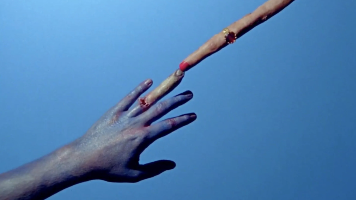
Dead Lover is her sophomore directorial effort (after 2017's dirtbag hangout film, Tito), an unhinged, theatrical, Regency-coded, fever-dream riff on the Frankenstein story. It centers on a lovelorn grave digger (Glowicki), who captures the affections of a dandy (Ben Petrie). He perishes at sea, and all that's recovered is his finger, with which she begins experimenting.
All is hugely exaggerated and deliberately overwrought and a bit shrill, but the commitment to the bit is so strong that it lands as hilariously demented instead of annoying. But the level of audacity and low-budget filmmaking will absolutely not be for everyone.
La Gradiva
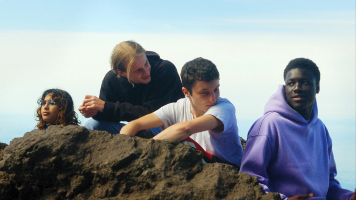
A study of the fluid relationships between a handful of French students on a school trip to Italy, from the rambunctiousness of youth to sexual exploration to the painful self-image of the quietest voices in the room. While there is at most a gentle push towards story as their time abroad comes to an end, their layers are frequently on display from scene to scene, ensuring you form a connection with at least one of them. We spend enough time with them experiencing the various ebbs and flows of the last moments of being a teenager that your heart breaks as theirs does.
That meandering does make the emotional gut-punches feel more contrived than natural. Also, many of the subplots started never conclude, and some aren't even revisited. Regardless, there's enough beauty and emotional power to keep your attention through its nearly two and a half hour runtime.
Ashes
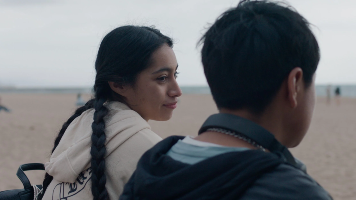
Diego Luna's first directorial feature in a decade (and fourth overall) follows Lucilia's (Anna Díaz) struggles to get by in Spain, far away from her native Mexico. But the narrative is so fragmented as to keep you at a distance, choosing to elide all sorts of character details that make their every action frustratingly nonsensical. The individual situations and vignettes are quite moving at times, but nowhere near enough to overcome the jagged nature of events, and the consistently abrupt way scenes end.
Coward
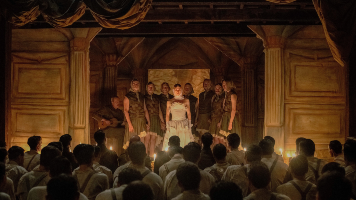
The story of Lukas Dhont's third feature is not concerned with anything revolutionary. Queer soldiers existed long before the Western world declared its acceptance of them, a fact widely acknowledged. That said, it's still a powerful thing to see such a relationship emerge between two young men, especially since neither identified as such before they find each other. Additionally, it's a neat trick to turn this WWI movie into a backdoor musical through focusing on the The Band of Rejects, a group of soldiers who perform in drag to entertain the troops. It's funny and sweet and unconcerned with downplaying the harsh realities of war. Still, while the performances and staging are superb, the film lacks the powerful emotionality of his previous two, failing to give it much heft.
Split Rock
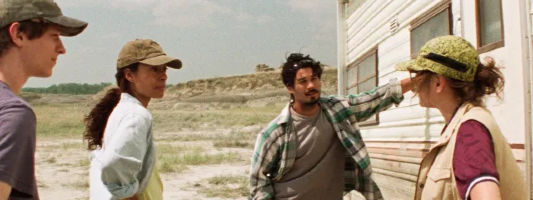
An eco-horror movie that moves at a glacial pace. If it was a fifteen minute short, it could have been something. Instead, it's a lot of nothing, punctuated by Lauren (Clark Backo) staring across the landscape as the droning score rises to a fever pitch, and then...cut to something else entirely. They're here to take a geological survey of the landscape, but to what end and what they're looking for is unclear, so all the detail they go into on their process is maddening. As is their refusal to acknowledge anything is wrong until it's far too late. It's nonsensical and aggravating and boring (save for one gnarly practical effect at the end).
At least I closed out the month on a horror movie.